Spacer
Product Survey
Product Survey > Deep Sea Seismic Systems, May-June 2010
Deep Sea Seismic Systems, May-June 2010

By Ronald Koomans and Serena Lyon, contributing editors, Hydro International


The deep sea seismic survey systems presented here are mainly used for high-resolution geophysical surveys for site investigation, exploration for oil and gas and for valuable minerals. In this product survey, we asked the manufacturers for systems that can be used for deep sea seismic surveys at an operating range >500m.


Several distinguishing characteristics of the systems are described here. All systems can store the collected acoustic data in the international SEG-Y standard. An advantage of this is that the survey data can be analysed and used by third-party software. Applied Acoustics uses CodaOctopus systems for data recording which can record in SEG-Y as well as XTF and CODA formats. According to the data provided by the suppliers, SIG does not have its own data processing system, which means the software used should be sourced from third parties. Applied Acoustics, EdgeTech and Knudsen Engineering supply all-round systems that can be used with third-party software.

Some manufacturers have given us descriptions of several seismic survey systems, providing a range of systems. Please feel free to send us any comments or suggestions you may have to help us improve this Product Survey. Your opinion is important to us. The complete overview of these systems can be found on our website, where you also have the opportunity to share your opinion on the individual products. Our website also contains information on seismic survey systems used for shallow-water applications , published in October 2009.


Browse or compare (max 5) the products:
Applied Acoustics 2010
EdgeTech 1993
Knudsen Engineering Limited 2007
SIG 2000
© HYDRO International
Most Popular Articles Most Popular News Most Popular Jobs
Spacer
 

Interactive


Hydrographic Survey of Riverbed Erosion

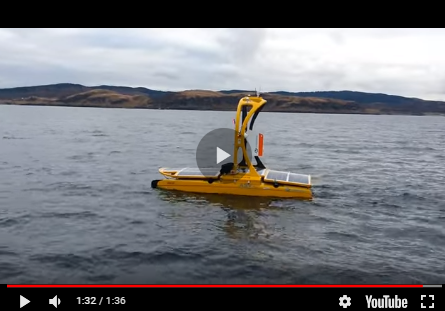
Members of the US Geological Survey were filmed while out on the Missouri River at Williston, North Dakota, USA, performing a hydrographic survey to monitor the state of riverbed erosion. They were using a multibeam echo sounder which transmits sound energy and analyses the return signal (echo) that has bounced off the riverbed or other objects. Multibeam sonars emit sound waves from directly beneath a ship's hull to produce fan-shaped coverage of the riverbed. 


Gauge height at the Williston gauge was approximately 27.65 feet when this video was taken. Additional information about the USGS streamgauge at Williston is available at http://waterdata.usgs.gov/nd/nwis?program=nwisman&site_no=06330000


 Last 5 items:
 Hydrographic Survey of Riverbed Erosion
 Introduction to GEBCO
 MCA on Surveying the British Coast
 Surveying in the Port of London
 Venessa O'Connell on Hydrography
 
Spacer
Spacer
Spacer
Spacer
Poll

What is More Interesting for Hydrographic Surveyors?


Spacer
Spacer
Spacer
Spacer
Spacer
Spacer